FLUTTER: A Vintage Botanical Pattern Collection
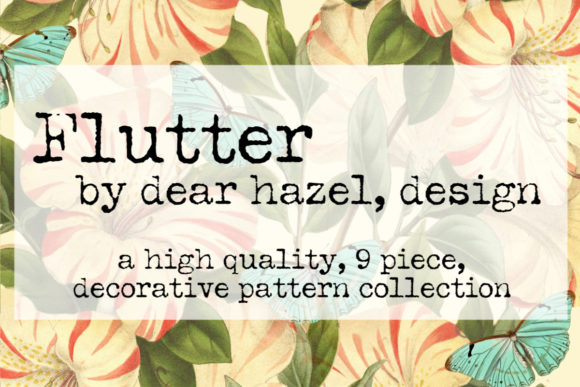
In a digital landscape saturated with minimalist grids and sterile geometric shapes, there is a quiet resurgence of desire for texture, history, and organic warmth. Enter FLUTTER, a decorative pattern collection that bridges the gap between archival elegance and modern design utility. Inspired by the delicate intricacies of vintage botanical prints and the intimate sentimentality of old love letters, this collection offers more than just a background; it provides a narrative layer to any visual project.
For creators, designers, and small business owners looking to infuse their work with soul, FLUTTER represents a return to craftsmanship. It is not merely a set of images but a toolkit for evoking emotion through visual storytelling. Whether you are designing a wedding invitation suite, crafting a brand identity for an artisanal bakery, or simply seeking inspiration for your next creative journal, understanding how to leverage these patterns can transform ordinary layouts into memorable experiences.
The Anatomy of FLUTTER
Before diving into applications, it is essential to understand the technical foundation that makes FLUTTER so versatile. The collection consists of 9 high-resolution JPGs, each meticulously crafted to ensure clarity across various mediums. The files are provided in a landscape orientation, measuring 11 inches in length and 8.5 inches in width. Crucially, every image is rendered at 300 dpi.
This specific resolution is non-negotiable for professional print work. Many digital assets fail when scaled for physical production because they lack the pixel density required for crisp edges and fine details. By providing 300 dpi files, FLUTTER ensures that the subtle veins of a leaf or the faint ink bleed of a handwritten note remains sharp whether viewed on a smartphone screen or printed on heavy cardstock. This attention to technical detail allows users to move seamlessly from digital mockups to final production without quality loss.
Why Vintage Botanicals Resonate Today
The appeal of botanical illustrations lies in their universal language. Plants are timeless symbols of growth, life, and natural beauty. When combined with the aesthetic of "old love letters," the FLUTTER collection taps into a deep-seated human nostalgia for connection and authenticity. In an era of ephemeral social media content, tangible, beautifully designed objects hold significant value.
Designers often struggle to balance "trendy" aesthetics with longevity. Trends fade quickly, but classic botanical motifs remain relevant for decades. Using FLUTTER allows marketers and educators to create materials that feel both current and enduring. The patterns provide a sophisticated backdrop that does not compete with primary text or product photography but rather supports it, adding depth and context without overwhelming the viewer.
Practical Applications for Diverse Creators
The versatility of the FLUTTER collection stems from its neutral yet expressive nature. Here is how different professionals can adapt these patterns for specific goals:
For Designers and Marketers
Brand identity is built on consistency. Use the 9 distinct patterns to create a cohesive visual system. You might use one pattern for email headers, another for social media story backgrounds, and a third for packaging inserts. Because all images share the same artistic DNA—vintage botanicals and script elements—they will look like part of a unified family even when used separately.
- Packaging Design: Apply the patterns to product boxes for cosmetics, teas, or candles. The 8.5-inch width is perfect for standard label sizes.
- Digital Ads: Use the landscape format for banner ads where you need a wide, unobtrusive background that draws the eye toward the call-to-action button.
- Print Collaterals: Create business cards or letterheads that stand out in a mailbox. The tactile quality suggested by the vintage style encourages recipients to keep the item rather than discard it.
For Educators and Content Creators
Educational materials often suffer from being visually dry. Incorporating FLUTTER can make learning resources more engaging without distracting from the core content. The patterns serve as excellent borders or page backgrounds for worksheets, presentation slides, or digital course modules.
- Workbooks and Journals: Use the patterns as chapter dividers or cover designs for printable PDFs sold online.
- Social Media Education: Create carousel posts where each slide features a different pattern from the collection, maintaining visual interest while delivering information.
- Newsletters: Break up long-form text with section headers that utilize the botanical imagery, guiding the reader’s eye through the content naturally.
For Hobbyists and Small Business Owners
If you run a side hustle selling handmade goods, FLUTTER can elevate your presentation. The "old love letter" inspiration suggests romance and care, which aligns perfectly with products meant to be gifted.
- Gift Tags and Wrapping: Print the patterns on kraft paper or specialty stock to create custom wrapping paper or gift tags.
- Event Stationery: For weddings, baby showers, or anniversary parties, these patterns offer a ready-made theme that feels curated and expensive.
- Art Prints: Since the images are high-resolution, they can be framed and sold as standalone wall art, particularly in frames that complement the vintage aesthetic.
Best Practices for Integration
To get the most out of FLUTTER, consider the following practical tips to ensure your designs remain clear, effective, and organized:
Maintain Contrast and Readability
Vintage patterns can be intricate. If you overlay text directly onto a busy area of a botanical print, legibility may suffer. To avoid this, use semi-transparent text boxes, drop shadows, or ample white space. Let the pattern breathe. The goal is to enhance the message, not obscure it. Always test your designs at actual size to ensure text remains readable.
Create Visual Harmony
While the collection includes 9 distinct images, they share a common color palette and stylistic approach. Mix and match them freely, but try to limit the number of different patterns used in a single layout to no more than two or three. This prevents visual clutter and maintains a sense of sophistication. Use lighter patterns for backgrounds and darker, more detailed ones for focal points.
Think About Texture
The "vintage" aspect of FLUTTER implies age and tactility. Even in digital formats, you can simulate this by adding subtle grain overlays or noise filters to your composite designs. For print, choose paper stocks that have a slight texture, such as cotton rag or recycled paper, to physically mimic the feel of the old documents that inspired the collection.
Conclusion: Adding Heart to Your Work
FLUTTER is more than a asset pack; it is an invitation to slow down and appreciate the details. In a world of fast consumption, designs that evoke a sense of history and personal connection have a unique power to engage audiences. By using these high-resolution, professionally formatted botanical patterns, you give yourself the tools to create work that is not only functional but also beautiful.
Whether you are launching a new brand, teaching a class, or simply expressing your creativity, let FLUTTER help you add a touch of vintage charm and genuine heart to your projects. The result is work that doesn't just inform or sell, but resonates.