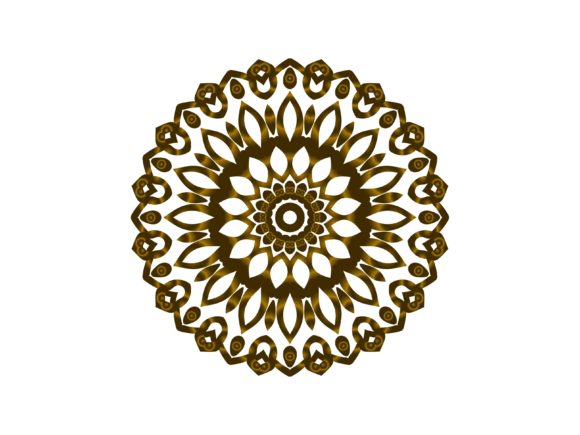
Mandala Gold Line Flower Art: A Strategic Asset for Premium Brand Identity
In the competitive landscape of visual branding, few elements command attention as effectively as the intersection of intricate geometry and metallic luxury. Mandala Gold Line Flower Art represents a specific aesthetic category that combines traditional mandala symmetry with delicate floral motifs, rendered through precise linear techniques and finished with gold accents. For professionals seeking to elevate their corporate identity, this design style offers more than mere decoration; it provides a sophisticated visual language that communicates heritage, elegance, and high value. This analysis explores the practical applications, structural strengths, and strategic advantages of incorporating these elements into modern business graphics.
The Anatomy of Elegant Linear Design
At its core, Mandala Gold Line Flower Art is defined by its reliance on line rather than solid mass. Unlike bold, blocky logos that rely on heavy contrast, this style utilizes thin, continuous strokes to create complex patterns. These lines often form radial symmetry, drawing the eye toward a central focal point, while organic floral shapes soften the rigid geometric structure. The use of gold—whether simulated through gradients in vector formats or applied via foil stamping in print—adds a layer of perceived value that resonates deeply with audiences associated with luxury and royal aesthetics.
This approach is particularly effective for brands that wish to avoid the stark minimalism of contemporary tech startups while steering clear of the cluttered complexity of baroque designs. Instead, it strikes a balance. The vector nature of these assets ensures that every curve remains crisp at any scale, from a tiny favicon to a massive billboard. The graphic integrity holds up because the design depends on proportion and precision, not texture or color depth alone. When executed well, the result is an emblem that feels both timeless and distinctly modern.
Strategic Applications in Corporate and Creative Identities
The versatility of Mandala Gold Line Flower Art extends across various sectors where trust, quality, and exclusivity are paramount. For fashion houses, beauty brands, and jewelry companies, these designs serve as powerful logotype components. They can function as standalone icons or as decorative frames surrounding typography. In such contexts, the art acts as a visual seal of approval, suggesting that the product within is crafted with care and attention to detail.
- Luxury Packaging: On cosmetic jars or perfume bottles, gold line art creates a tactile visual experience even before the package is opened. It suggests premium contents and justifies higher price points.
- Wedding and Event Industry: For florists, planners, and venues, these motifs align naturally with themes of romance and celebration. The vintage feel of the mandala adds a sense of tradition and permanence.
- Wellness and Holistic Brands: The circular nature of the mandala symbolizes unity and wholeness, making it ideal for yoga studios, spas, and holistic health practitioners who want to convey balance without appearing overly clinical.
- Publishing and Media: High-end magazines or literary journals may use these designs as section dividers or masthead decorations, adding a touch of classic refinement to digital or print layouts.
Evaluating Quality and Technical Execution
When sourcing or commissioning Mandala Gold Line Flower Art, the distinction between amateur and professional execution is stark. High-quality assets are built on robust vector foundations. This means the artwork is composed of mathematical paths rather than pixels, allowing for infinite scalability without loss of clarity. A poorly constructed version may appear jagged when enlarged or lose its delicate details when reduced in size.
Furthermore, the handling of the gold element requires technical nuance. In digital design, true gold does not exist as a single hex code. Effective designers use layered gradients, highlights, and shadows to simulate the reflective properties of metal. In physical production, the choice between printing a yellow-gold ink versus using actual gold foil or metallic paper significantly impacts the final perception. Professional evaluations should always consider how the asset will be reproduced. If a brand plans to use the logo on dark backgrounds, the contrast of the gold line work must be sufficient to maintain legibility.
Consistency is another critical factor. A well-designed set includes variations: a full emblem, a simplified icon, and perhaps a monogram derived from the initial letters. This flexibility ensures that the brand identity remains cohesive across different touchpoints, from social media avatars to letterheads. The ability to isolate specific elements of the mandala for use as decorative borders or background textures adds significant utility to the asset set.
Integration with Typography and Layout
One of the greatest strengths of this artistic style is its compatibility with typography. Because the lines are fine and airy, they do not compete with text. Instead, they frame and enhance it. Serif fonts, which evoke tradition and authority, pair exceptionally well with gold line art. The sharp serifs complement the precision of the linear flowers, creating a unified aesthetic. However, clean sans-serif fonts can also work if the goal is to juxtapose modern simplicity with ornate decoration.
For marketers and designers, understanding this relationship is crucial. Placing a dense, complex mandala directly behind small body text can reduce readability. Instead, the art should be used as a header ornament, a watermark, or a border element. This strategic placement preserves the elegance of the design while maintaining functional usability. The negative space within the mandala is just as important as the lines themselves; it allows the background to show through, integrating the graphic seamlessly into the overall composition.
Limitations and Considerations
While highly effective for certain niches, Mandala Gold Line Flower Art is not a universal solution. It may feel out of place for brands targeting youth markets with edgy, disruptive, or ultra-minimalist identities. The association with vintage and royal styles can sometimes come across as outdated if not balanced with modern layout techniques. Additionally, the complexity of the design requires careful reproduction. Printing costs can increase if special finishes like embossing or foil stamping are required to achieve the intended impact.
There is also the risk of overuse. Because this style is popular in the luxury sector, it can become cliché if not customized appropriately. Generic clip-art versions of mandalas lack the unique character needed for strong brand differentiation. Successful implementation involves commissioning custom illustrations that incorporate specific symbolic elements relevant to the brand’s story, rather than relying on stock templates. This customization ensures that the identity remains distinct and legally protectable.
Conclusion
Mandala Gold Line Flower Art is more than a decorative trend; it is a strategic design tool that bridges the gap between traditional craftsmanship and modern digital presentation. Its strength lies in its ability to convey prestige, stability, and artistic merit through subtle linear details and metallic associations. For businesses aiming to position themselves as premium, trustworthy, and aesthetically refined, these assets offer a reliable foundation for visual communication. By prioritizing high-quality vector construction, thoughtful typographic pairing, and appropriate contextual application, professionals can leverage this style to create enduring brand identities that resonate with discerning audiences.